Posts

THE APGAR SCORE

Image
Updated 5/26 Dearnurses.net is no longer available.                                       Dearnurses.net is no longer available. Above is a sample of the Apgar score. The Apgar score is an assessment done at 1 minute  and 5 minutes after the birth of the   newborn .                            Dehydration In infants and small children, signs such as sunken fontanels, sunken eyes and irritability may be caused by  dehydration .  PEDIATRIC ASSESSMENT TRIANGLE An initial assessment that is easy. It is based on - Appearance - Breathing - Circulation
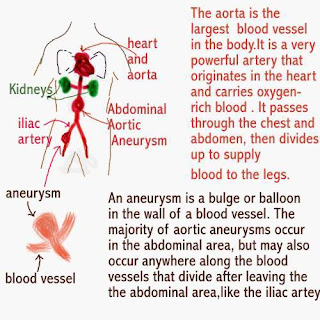
WHAT IS AN ANEURYSM ?

Image
What is the aorta? The aorta is the largest blood vessel in the body. It is a very powerful artery that originates in the heart and carries oxygen-rich blood . What is an aneurysm? An aneurysm is a bulge or balloon in the wall of a blood vessel. The majority of aortic aneurysms occur in the abdominal area, but may also occur anywhere along the blood vessels that divide after leaving  the abdominal aorta. For more helpful information , just click on the link: Abdominal Aortic Aneurysm   Learn more about: Traumatic Brain Injury Learn more about:  PTSD and  The immune  System Enjoy the video:  Stress and its impact

MERRY CHRISTMAS TO ALL

Image
Updated 3/26 Dear nurses, I just want to wish you all a very Happy and Safe Christmas. Enjoy watching my video: Sessions 61- From Holiday Cheer to Holiday Horrors Please enjoy the videos: Sessions 38 -  Happy Holiday Learn more about :  Travel  and eating Learn more about: All things food       

HAPPY THANKSGIVING TO ALL

Image
Dear nurses, I just want to wish you all a very Happy and safe Thanksgiving. Learn more about : P otential problems and   Care planning and  The Digestive System Common causes of medication errors Berries are rich in vitamins , potassium and magnesium. They are also said to have anti-inflammatory and antioxidant properties. Learn more :  All Things food  Learn more about:  Foods and their properties

SIMPLE FACTS ABOUT HYPOVOLEMIC SHOCK

Image
The patient in Hypovolemic Shock The patient in Hypovolemic Shock has usually lost a significant amount of blood. Fluid replacement and  assessment is necessary. IV fluids such as Ringers Lactate, Albumin or blood transfusion may be used in the treatment. Enjoy watching the videos : Sessions for Nurses 9 - The Patient in Hypovolemic or Spinal Shock The New Nurse - Blood transfusion Blood transfusion reaction: If a blood transfusion is ordered by the doctor, it is important for the nurse torememb er that a reaction is possible. There are many steps to follow, in order to ensure that the blood transfusion is done correctly .  The nurse should also bear in mind , the possibility of a blood transfusion reaction, even when things are done the right way. Warning signs of a blood transfusion reaction: -  chills, anxiety, flushing - itching, shortness of breath, chest pain Immediate action should be taken, to stop the blood and notify MD for further orders.

A CARDIOPULMONARY ARREST - QUIZ QUESTIONS

Image
               A Code Blue in progress The scenario above, shows several staff members around the bedside of    a  patient in cardiopulmonary arrest, in the ICU. However , this can occur                 anywhere. Trained staff are usually assigned to follow ACLS guidelines  in such a situation. CPR is started by the staff. Learn more by watching the video: The New Nurse- Assessment  Heart attack for the layperson Cardiopulmonary arrest is called a Code Blue. This means the heart has stopped beating and the body's cells are deprived of blood supply and oxygen. Immediate action is taken by the staff , to call a Code Blue overhead. This summons trained personnel to that patient's bedside. Without a doubt, everything is chaotic. A crash cart which contains medications ,               syringes, suctioning equipment, a defibrillator, IV solu...

SIMPLE BRAIN FACTS -NURSES DID YOU KNOW?

Image
The brain is protected by the skull. Injury to the brain may result in swelling. The skull is made of solid bone and the brain has no room to expand when swelling occurs. ICP Monitoring is done to reduce swelling and monitor brain pressures. The brain injured patient is at risk for seizures.  This should be reflected in the plan of care . Learn more, by watching the videos: ICP monitoring The brain injured patient Learn more about : Communication skills