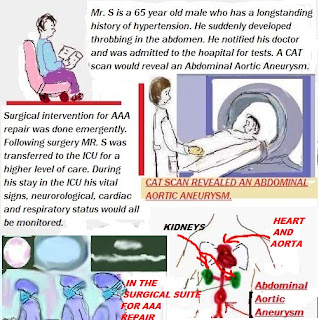
Scenario : Mr. S is an elderly male who has a longstanding history of hypertension. He suddenly develops throbbing pain in the abdomen. He notified his doctor and was admitted to the hospital for tests. A CAT scan would reveal an Abdominal Aortic Aneurysm. Surgical intervention for AAA was done emergently. Following surgery, Mr.S was transferred to the ICU for a higher level of care. During his stay, his vital signs, neurological, cardiac and respiratory status would all be monitored. Please click on the links for more learning: Hemodynamic Monitoring Info for the layperson Scenario : Mr.S had a repair of an Abdominal Aortic Aneurysm done. He will be cared for and closely monitored in the ICU. Please click on the link below, for more information. Mr. S in the ICU. What is an aneurysm? An aneurysm is a ballooning or bulging in a blood vessel. Aneurysms may occur in the brain or the abdomen (the aort...
The image above shows the clinical picture of the patient with Anasarca. Anasarca and its causes Anasarca, which is also known as generalised edema, may be caused by a number of conditions. These include: - Heart, renal or liver failure - Low albumin (hypoalbuminemia), burns - Corticosteroids and more The treatment is directed at the cause: - The patient in renal failure may require hemodialysis. - Liver failure may call for long and aggressive treatment. Fluid restriction, diuretics, dietary changes (like sodium restriction), and daily weights may be ordered by the doctor. - The patient with hypoalbuminemia will need IV albumin replacements. Lab values are also necessary, to monitor an improvement in the albumin levels or sodium levels. Also enjoy watching the video: Sessions 46- Assessment QUIZ QUESTIONS 1) What is anasarca also known as? 2) Name some of the causes? 3) How is this condition treated? 4) What is hemodialysis? Please watch the vid...
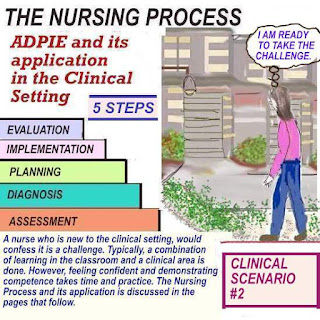
The Nursing Process A nurse who is new to the clinical settin g, knows all too well it is a challenge. Typically, a combination of learning in the classroom and a clinical area is done. However, feeling confident and demonstrating competence takes time and practice. Assessment and Diagnosis are discussed here . ADPIE and its application in the clinical setting. The five steps of ADPIE. A- assessment D- diagnosis P- planning I - mplementation E- evaluation PLANNING ( IN ADPIE ) Mrs. G was admitted to the hospital with complaints of headaches, visual disturbances and occasional unsteady gait. This has been going on for about two weeks. Her family members decided to seek medical advice. The doctor has examined her and ordered a CT scan of the head. The nurse who is responsible for her care, begins to work on the care plan . She will identify the problems based on the diagnosis. Other staff members will also assist in the process. IMPLEMENTATION ( IN ADPIE) The nu...





Comments
Post a Comment