THE CLINICAL SETTING - PART 1
THE CLINICAL SETTING FOR NURSES- PART 1

Every nurse, regardless of location, will experience
the clinical setting.This aea of Nursing and its importance,
is often overlooked.
Learning in the classroom is essential. However,
putting learning into action, takes different turns.
This compilation of clinical scenarios, is designed
to help the clinical nurse take on the challenges that
lay ahead, in the clinical setting. See below.
Clinical appearance of the patient in DKA

with the clinical picture of a patient in Diabetic
Ketoacidosis (DKA). His blood glucose was 600.
Tom has an altered level of consciousness (LOC).
Patient education
patient in DKA. Frequent monitoring of
blood glucose, Insulin IV, Potassium
replacements are included in the management.
Learn more:
1) What are some of the signs of a patient in DKA?
2) How is DKA managed?
3) What is another name for hyperglycemia?
Sessions 41- Diabetic and seizure patients

Insulin is a hormone which is produced
in the pancreas by special glands known
as the Islets of Langerhans.
When we eat a meal like hamburger, fries and
milkshake, Insulin is released in the blood stream
to control blood glucose.The liver stores glucose
in the form of glycogen. If the pancreas is not able
to produce insulin, diabetes ensues.
Diabetes Mellitus may be Type 1 or Type 2.

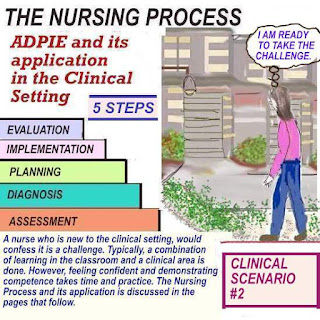
Learn more about: The Nursing Process

Learn more about : Nursing communication

Common causes of medication errors

IV infiltration may cause damage to the skin and
surrounding tissue.Learn more about: IV site care


Comments
Post a Comment